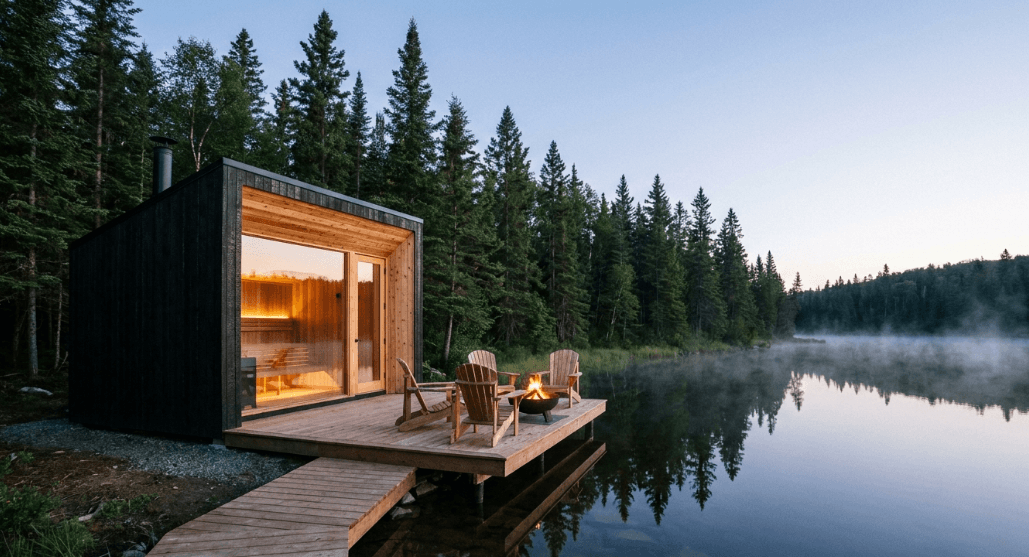
A flat-pack cabin or barrel sauna kit can be assembled by two reasonably handy adults in a weekend, but the electrical hookup for a hardwired heater almost always needs a licensed electrician regardless of who assembles the shell. The real decision most buyers face is not DIY versus fully professional, it is which parts to do themselves and which to hand off, since most installations end up being a mix of both.
What does DIY assembly actually involve?
Most kits ship as numbered wall panels, pre-cut roof pieces, and hardware bags, designed to go together without specialized carpentry skills. A typical cabin assembly runs 10 to 16 hours across a weekend for two people, following a printed or video sequence: base frame, wall panels in order, roof, door and window, then interior bench installation. The tools involved are usually basic, a cordless drill, a rubber mallet, a level, and a ladder, nothing that requires renting specialty equipment. Barrel kits are often somewhat faster since there are fewer individual wall panels, though getting the curved staves seated evenly in the cradle takes a bit more care and patience than snapping together flat panels.
Can the foundation work be done without a contractor?
Yes, for most residential setups. A compacted gravel pad or a set of pressure-treated wood skids is well within reach for a homeowner comfortable with basic yard work, typically a weekend project on its own before the sauna kit even arrives. A poured concrete pad is more durable long-term but usually makes sense to hire out unless the homeowner already has concrete experience, since a pad that is not level by more than a half inch across its span can throw off door alignment on the finished structure. Whichever base is chosen, it needs to fully cure or settle before the kit goes on top of it, so this step should happen weeks ahead of the assembly weekend, not the same day.
Why does the heater hookup usually require a professional?
Most cabin and barrel heaters in the 6 to 9kW range need a dedicated 220 to 240-volt circuit, which is well beyond a standard household outlet and involves running new wire back to the electrical panel. This is both a genuine safety issue, given the amperage involved and outdoor exposure to moisture, and in most areas a code requirement enforced through a permit and inspection. Attempting this without a license is not just risky, it can also complicate insurance and resale if the work is ever discovered to be unpermitted. This is the one part of the project where hiring out is close to universal advice, even among otherwise committed DIY households.
How much does hiring it all out actually cost?
Full-service installation, meaning a company handles the foundation, assembly, and electrical from start to finish, typically runs $800 to $2,500 depending on region, site accessibility, and how much electrical work is involved, on top of the sauna’s own price. Hiring only an electrician for the final hookup, while doing the pad and assembly personally, is a common middle path and usually costs $300 to $700 depending on distance from the main panel and local labor rates. Buyers weighing the full spectrum of options, from a bare kit to a fully installed turnkey setup, can review what different retailers include in their installation packages. Specialty sellers such as the team at SweatDecks often list exactly what ships as a kit versus what requires a local installer to complete.
Frequently Asked Questions
Can two people assemble a barrel or cabin sauna kit themselves?
Yes, for most flat-pack cabin and barrel kits. Assembly typically takes two able adults a full weekend, 10 to 16 hours, using basic tools like a drill, level, and rubber mallet, following the manufacturer’s numbered panel sequence.
Does the electrical hookup have to be done by a licensed electrician?
In most jurisdictions, yes, for a hardwired 220-volt heater circuit. A licensed electrician is required both for safety and because most local codes and permit inspections mandate it for a new dedicated outdoor circuit.
How much does professional installation typically add to the cost?
Full-service installation, including site prep, assembly, and electrical, typically adds $800 to $2,500 depending on region and site complexity, on top of the sauna’s purchase price.
What foundation work does a DIY installer need to handle?
A level pad, whether poured concrete, compacted gravel, or pressure-treated skids, is the buyer’s responsibility on nearly every kit. It needs to be prepared and cured or settled before the cabin or barrel arrives for assembly.
Does DIY assembly void the manufacturer warranty?
Not usually, as long as assembly follows the manufacturer’s instructions and clearance requirements exactly. Most warranties are voided by incorrect installation, not by the fact that a professional was not hired, so following the manual closely is what protects coverage.
What mistakes cause the most rework on DIY installs?
Rushing the foundation is the single biggest cause of problems reported by DIY installers after the fact. A base that is off level by even three quarters of an inch across its span can cause doors to bind, roof panels to gap at the seams, and water to pool in the wrong spot on the roofline. Skipping the manufacturer’s clearance chart for the heater is the second most common issue, particularly when a household decides to shift the heater’s position slightly to fit a bench layout they prefer, not realizing the clearance numbers account for both fire safety and even heat distribution. Reading the full manual before starting, rather than working panel by panel from memory after a first skim, saves the most time overall, since most kits number every panel and hardware bag specifically to prevent guesswork.
Weather timing matters too. Assembling panels in direct sun during a heat wave can cause wood to expand slightly during fitting, only to shrink back and leave small gaps once temperatures drop, so many installers prefer a mild, dry weekend in spring or fall over the height of summer.
What tools should a household have on hand before starting?
Beyond the basics of a drill, level, and rubber mallet, a few extra tools make the weekend noticeably smoother. A second cordless drill with a driver bit already loaded saves constant bit-swapping between drilling pilot holes and driving screws. Pairing someone with basic flat-pack assembly experience alongside a first-timer on a two-person team tends to go faster than two complete beginners working it out from scratch.
A sturdy step ladder rated for outdoor use is worth renting for roof panel work on a full cabin, since an unstable chair or a too-short ladder is where most minor assembly injuries happen. None of this adds much cost, usually under $50 for the weekend, but it turns a frustrating stretch of the project into a manageable one.
Does the permit process vary a lot by location?
Significantly, yes. Some municipalities treat a sauna under a certain square footage as an accessory structure requiring no building permit at all, only the electrical permit for the heater circuit. Others require a full building permit regardless of size if the structure is permanent rather than on skids, and a few have specific setback rules from property lines that affect where in the yard it can legally sit. Calling the local building department before ordering, rather than after the kit arrives, avoids the worst-case scenario of a structure that has to be relocated or modified to meet a rule nobody checked in advance.
References
- Hussain, J. et al. “Cardiovascular and Other Health Benefits of Sauna Bathing: A Review of the Evidence.” Mayo Clinic Proceedings, 2018. https://pubmed.ncbi.nlm.nih.gov/30077204/
- “Clinical Effects of Regular Dry Sauna Bathing: A Systematic Review.” Evidence-Based Complementary and Alternative Medicine, 2018. https://pubmed.ncbi.nlm.nih.gov/29849692/
- “Benefits and risks of sauna bathing.” The American Journal of Medicine, 2001. https://pubmed.ncbi.nlm.nih.gov/11165553/
- NFPA. “Codes and Standards.” https://www.nfpa.org/